

In Anatolia, a sign often outlives the material that carries it. Stone wears away and gold is melted and cast again, yet the ear of wheat, the eye and the knot continue to carry meaning across centuries. A symbol endures not because of its beauty alone, but because of what a community does with it.
Burial finds make this especially clear. The sign on a ring says less about who its owner was than about what they believed. Displays of wealth date quickly; declarations of belonging do not. The forms that return most often in museums are not always the most costly, but those that have carried the greatest weight of meaning.
Most of the forms that recur among Anatolian finds carry a narrative of protection and abundance rather than of status.
A sign becomes a symbol when it continues to speak after its wearer is gone. Otherwise, it is ornament.
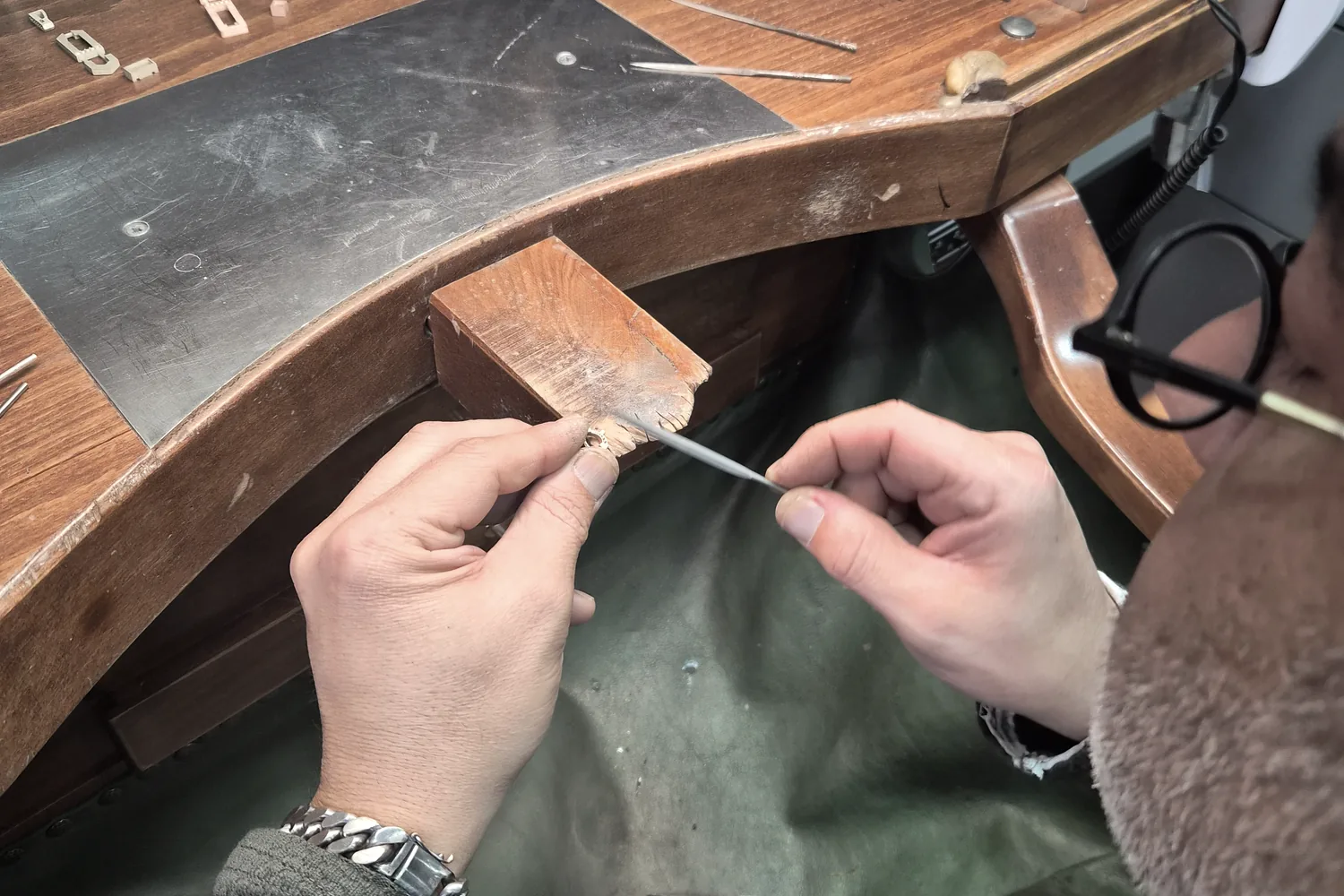
The difference between quotation and design
The challenge for contemporary design is simple to name and difficult to meet: quoting a form is easy; giving it renewed meaning is not. Enlarging an ancient motif and placing it on a surface is quotation. Understanding why that motif existed and allowing it to serve the same purpose for someone today is design.
D’Evin asks this of every chosen symbol: does it say something quietly about the person who wears it? If it does not, however beautiful it may be, it remains a pattern for a season.